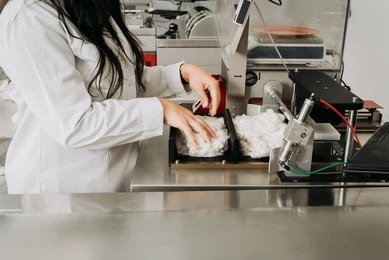
Fabric testing methods are procedures that evaluate the physical, mechanical, chemical, and performance properties of textile materials before and during production. These methods measure everything from tensile strength and colour fastness to shrinkage, chemical safety, and flammability, giving manufacturers, exporters, and brands a reliable picture of fabric quality before a single garment is cut.
Fabric makes up roughly 70% of the total cost in apparel manufacturing and covers almost the entire visible surface of a finished garment. A defect that goes undetected at the fabric stage does not disappear. It moves forward into cutting, sewing, finishing, and packing, where it costs far more to fix. Fabric testing catches those problems early.
The main types of fabric testing methods include physical testing, mechanical testing, colour fastness testing, chemical and safety testing, comfort and performance testing, and flammability testing. Within those categories, laboratories run more than 25 individual test methods, from GSM (grams per square metre) measurement and tensile strength testing to formaldehyde detection and ultraviolet protection factor (UPF) evaluation.
This guide covers all major fabric testing methods, the standards behind them, how to choose the right test for your fabric type and end use, common mistakes to avoid, and how SAB Labs supports manufacturers and exporters across Pakistan with accredited textile testing services.
What Is Fabric Testing?
Fabric testing is not just a quality checkpoint. It is the foundation of responsible production. Before any fabric enters the cutting room, testing tells manufacturers what they are working with, where the risks are, and whether the material is fit for purpose. The sections below cover its definition, its importance, and who in the supply chain relies on it.
Definition of Fabric Testing
Fabric testing is the process of evaluating textile materials against defined criteria for physical structure, mechanical strength, colour stability, chemical safety, and performance under use conditions. Laboratory technicians run tests on fabric samples in a controlled environment using standardised equipment and methods referenced by international bodies such as ASTM International, ISO, and AATCC.
The results tell manufacturers whether a fabric lot is acceptable for production, whether it meets buyer specifications, and whether it complies with regulatory or export requirements.
Why Fabric Testing Is Important in Textile Manufacturing
Fabric accounts for the majority of material cost in garment production. When a faulty fabric lot enters production undetected, every subsequent operation adds cost to a defective product. Cutting, sewing, washing, finishing, and packing all pile cost onto something that will eventually be rejected. Identifying the fault at the fabric receipt stage avoids all of that downstream waste.
Beyond cost, fabric testing addresses performance and safety. A fabric used in children’s sleepwear must pass flammability testing. A fabric going to a European retailer must comply with restricted substance limits (RSL). A stretch fabric used in athletic wear must recover its shape after repeated loading. None of these requirements can be verified by looking at the fabric alone.
In apparel manufacturing, fabrics face mechanical and physical actions throughout their service life, including tensile stress, bending, rubbing, and flexing. Chemical actions from perspiration, washing, and environmental exposure also change fabric appearance and function over time. Laboratory tests simulate these conditions so manufacturers can predict real-world performance before production begins.
Finished fabrics can also carry defects from earlier production stages. Raw material irregularities become more visible after dyeing and finishing. Yarn defects such as thick and thin places, miss picks, broken ends, and miss stitches affect the fabric surface. Weaving and knitting imperfections, along with dyeing and printing irregularities, further reduce fabric quality. Testing at the pre-production phase screens for all of these issues.
Who Needs Fabric Testing?
Fabric testing serves every stakeholder in the textile and apparel supply chain:
Garment manufacturers use fabric testing to verify incoming fabric quality before cutting, reduce production losses from faulty materials, and document compliance for buyers.
Fabric mills and dye houses use testing to control process quality during weaving, knitting, dyeing, and finishing, and to confirm that finished fabric meets customer specifications.
Exporters need accredited test reports to meet import requirements in destination markets, satisfy buyer quality programmes, and demonstrate RSL compliance.
Brands and retailers require supplier test reports as part of their quality assurance and product liability frameworks.
Testing laboratories provide third-party inspection and testing services, issuing independent reports that international buyers and certification bodies accept.
Main Types of Fabric Testing
Fabric testing falls into six main categories, each designed to measure a different aspect of fabric performance. Understanding these categories helps manufacturers and buyers identify which tests apply to their specific fabric, end use, and market requirements.
Physical Fabric Testing
Physical testing measures the basic structural and dimensional properties of a fabric. Tests in this category include fabric weight (GSM), thickness, width, construction (weave or knit structure), dimensional stability after laundering, bowing, and skewness. Laboratories run physical tests on almost every fabric before production approval.
Mechanical Fabric Testing
Mechanical testing measures how a fabric responds to applied forces. This includes tensile strength, elongation, tearing strength, bursting strength, seam slippage, abrasion resistance, and pilling resistance. These tests predict how a fabric will perform during garment production and throughout the service life of the finished product.
Colour Fastness Testing
Colour fastness tests measure how well a fabric holds its colour when exposed to washing, rubbing, perspiration, light, and other conditions. Poor colour fastness leads to consumer complaints, garment returns, and brand damage. Colour fastness testing is a standard requirement for virtually all dyed or printed fabrics.
Chemical and Safety Testing
Chemical testing identifies hazardous substances in fabric, including formaldehyde, heavy metals, azo dyes, and other restricted chemicals. These tests are mandatory for export to many markets and for compliance with buyer RSL programmes. pH testing also falls in this category, as extreme pH values cause skin irritation.
Comfort and Performance Testing
Comfort and performance testing evaluates how a fabric interacts with the wearer. Key tests include air permeability (breathability), moisture management, water repellency, stretch and recovery, and thermal properties. These tests matter most for sportswear, workwear, and technical textiles.
Flammability and Special-Use Fabric Testing
Flammability testing measures how quickly a fabric ignites and burns. It is a regulatory requirement for children’s sleepwear, upholstery fabrics, and certain workwear applications. UPF (ultraviolet protection factor) testing falls in this category as well, for fabrics marketed as sun-protective.
Common Fabric Testing Methods Explained
Each fabric testing method targets a specific performance property. The methods below cover the full range of tests run in a textile laboratory, from basic visual checks to detailed chemical analysis, with the standard references and procedures behind each one.
Visual Inspection and Fabric Grading
Visual inspection is the most widely used method for deciding whether to accept or reject a fabric lot. The fabric roll is loaded onto one side of an inspection table with appropriate lighting for intensity and angle. The fabric passes across the table at a controlled speed while an inspector checks for predefined faults.
Each fault receives a point value based on its dimension, severity, and nature. The most commonly used system is the four-point system (referenced in ASTM-D5430), which assigns a maximum of four points to any single defect within one metre of fabric. After inspecting a representative sample of rolls, the inspector calculates the total points and expresses them as points per 100 square units (square yards or square metres) or points per 100 linear units (metres or yards).
The acceptance or rejection decision rests on an agreed threshold between the supplier and customer. For example, if a supplier agreed to deliver fabric at 20 points per 100 linear metres, a result of 30 points per 100 linear metres triggers rejection.
Fabric Colour Matching and Shade Evaluation
Standard fabric colour evaluation involves matching the dyed fabric against the Pantone colour reference number the customer specifies. Garment manufacturers check fabric colour against pre-approved fabric swatches developed during the pre-production phase.
Process variations in dyeing mean that not all fabric rolls will match the approved swatch exactly. Minor variations go to the customer for approval. The inspector then accepts or rejects each roll based on the range of approved shades.
Shade variation within a single roll also needs checking. The inspector evaluates fabric shade at the beginning, end, and inner section of each roll. For wide fabrics such as home textiles, shade variation across the fabric width is checked by comparing the left edge, centre, and right edge of the fabric.
GSM Test / Fabric Weight Test
Fabric weight, measured in grams per square metre (GSM), is a fundamental property in fabric selection for specific end uses. Heavier fabrics do not suit warm-weather garments, and lighter fabrics may not provide enough structure for certain applications.
The standard test method is ASTM-D3776. The technician cuts a circular specimen 113 mm in diameter using a GSM cutter, weighs it on a precision balance, and multiplies the weight in grams by 100 to give the fabric weight in GSM.
Fabric Thickness Test
A thickness gauge measures fabric thickness under a specified pressure. Thickness affects thermal insulation, hand feel, and suitability for certain construction methods. It matters most for technical textiles, outerwear, and multi-layer fabrics.
The standard method specifies the pressure applied, the presser foot area, and the conditioning requirements before measurement.
Tensile Strength and Elongation Test
Tensile strength testing measures the maximum force a fabric can take before breaking when pulled in opposite directions. The technician clamps a test specimen in the jaws of a tensile testing machine and applies force at a controlled rate until the specimen breaks. The maximum force recorded gives the breaking strength, typically in Newtons (N) or kilogram-force (kgf).
To calculate elongation, subtract the initial specimen length from the length at the breaking point and express the difference as a percentage. The tensile testing method applies to most woven and nonwoven fabrics. Knitted and stretch fabrics need specific test configurations.
The reference standards are ASTM-D5035 (strip method) and ASTM-D5034 (grab method).
Tearing Strength Test
Tearing strength is the force needed to start or continue tearing a fabric under specified conditions, in either the warp or weft direction. Tear failures in garments typically happen when a moving fabric catches on a sharp object and the tear travels along a line.
Three methods test tearing strength. The first uses a falling pendulum (Elmendorf) tester. A test specimen with a pre-cut central slit sits between two clamps, and the pendulum tears it through a fixed distance. The technician calculates resistance to tearing from the pendulum scale reading and the full-scale capacity (reference: ASTM-D1424).
The second method uses a tensile testing machine with a constant rate of extension (CRE). A rectangular specimen with a cut on the short side is gripped in the machine jaws and pulled apart. The average of the highest force peaks in the recorded graph gives the tearing strength (reference: ASTM-D2261).
The third method is the trapezoid procedure. The technician marks a trapezoid outline on a rectangular specimen, makes a slit on the shortest side, and grips the non-parallel sides in the machine jaws. Force propagates the tear, and the average peak force gives the tearing strength (reference: ASTM-D5587).
Bursting Strength Test
Bursting strength is the force needed to rupture a fabric by pushing a rounded object through its surface at a right angle. This test is particularly relevant for knitted fabrics and woven fabrics that face multidirectional stress in use.
The ball burst test uses a polished, hardened steel ball attached to a pendulum actuating clamp. The technician places a fabric specimen between grooved plates, fastens it with screws, and forces the steel ball through the fabric until rupture occurs. The force at rupture gives the bursting strength.
Two standard methods apply: a constant rate of traverse method (reference: ASTM-D3787) and a constant rate of extension (CRE) method (reference: ASTM-D6797). The Mullen Test is another widely referenced method for woven fabrics using hydraulic pressure.
Seam Slippage / Yarn Slippage Test
Seam slippage testing measures the resistance of warp or weft yarns to sliding past each other along a sewn seam under applied force. In loosely woven fabrics or fabrics with a smooth surface, yarn slippage at seams is a common durability problem.
To test warp yarn slippage, the technician cuts a specimen with its longer side along the weft direction, folds it, and sews a standard seam parallel to the warp yarn. The specimen is then clamped in the jaws of a tensile tester with the seam at the centre. The force at which a specified slippage appears gives the seam slippage resistance. The reference standard is ASTM-D434.
Abrasion Resistance Test
Abrasion resistance measures how well a fabric withstands surface wear from repeated rubbing. Fabrics with low abrasion resistance lose surface fibres quickly, leading to thinning, pilling, or hole formation.
The Martindale Abrasion Tester is the most widely used instrument for this test. The technician rubs a fabric specimen against a standard abrasive material in a figure-eight motion under controlled pressure. The number of rubs before a defined degree of surface change occurs gives the abrasion resistance rating.
Pilling Resistance Test
Pilling is the formation of small balls of entangled fibres on the fabric surface, caused by abrasion during wear or laundering. Pilling is particularly common in synthetic fabrics and blends.
The Martindale Abrasion Tester is also used for pilling assessment. After a specified number of rubs, the technician compares the specimen surface against photographic standards to assign a rating from 1 (heavy pilling) to 5 (no pilling). The ICI Pilling Box Tester is an alternative for certain fabric types.
Dimensional Stability / Shrinkage Test
Fabric shrinkage testing measures the change in fabric dimensions after laundering under standardised conditions. Shrinkage is expressed as a percentage of the original dimension in both the warp and weft directions.
The technician cuts a square specimen from the fabric roll and marks smaller reference points inside it at a fixed distance from the edges, to avoid the effect of fraying during washing. The specimen is washed and dried according to the specified conditions. The technician remeasures the dimensions and calculates the percentage dimensional change.
The reference standard is AATCC TM 135. Shrinkage results feed into garment pattern grading to make sure the finished garment meets target dimensions after the customer’s first wash.
Bowing and Skewness Test
Bowing is the displacement of filling yarns (in woven fabrics) or courses (in knitted fabrics) from a line perpendicular to the fabric selvage. Skewness is when that same displacement is angular rather than curved.
Both bowing and skewness disturb the grain line of cut pattern pieces. Garments made from bowed or skewed fabric twist, pull, or sit incorrectly on the body after washing.
To measure bowing, the technician places a steel tape across the fabric width. The greatest distance between the straight edge of the tape and the curved filling yarn gives the bow depth (D). Bow percentage is calculated as: Bow (%) = (D / BL) x 100, where BL is the straight distance between the points where the filling yarn meets the two selvages.
Skewness is calculated from the angular deviation of the filling or course from a line perpendicular to the selvage. The reference standard is ASTM-D3882.
Air Permeability Test
Air permeability measures the rate of airflow passing through a fabric at a right angle under a specified pressure differential. Fabrics with very low air permeability trap moisture and heat against the skin, causing discomfort and odour. Air permeability is a key performance requirement for sportswear, workwear, and outerwear.
The test adjusts the rate of airflow through a known fabric area to reach a prescribed pressure difference between the two fabric surfaces. Results are expressed in cm3/s/cm2 or ft3/min/ft2. The reference standard is ASTM-D737.
Water Repellency and Water Resistance Testing
Water repellency testing measures how well a fabric resists wetting on its outer surface. The spray test (AATCC 22) applies a water spray to the fabric surface and rates the degree of surface wetting from 0 (complete wetting) to 100 (no wetting).
Water resistance testing measures how well a fabric resists water penetration under hydrostatic pressure. The Hydrostatic Head Test (ISO 811) applies increasing water pressure to one side of the fabric until water penetrates to the other side. This test applies to coated fabrics, waterproof membranes, and rainwear.
Colour Fastness to Washing
Colour fastness to washing measures how much a fabric’s colour changes, and how much colour it transfers to adjacent materials, after laundering under specified conditions. Results are rated on a grey scale from 1 (very poor) to 5 (excellent) for both colour change and staining. The reference standards are ISO 105-C series and AATCC 61.
Colour Fastness to Rubbing / Crocking
Crocking tests measure colour transfer from a dyed fabric to white fabric through dry and wet rubbing. The technician presses a dry and a wet white rubbing cloth against the test specimen using a standard crock meter with a defined force and number of strokes. The degree of staining on the white cloths is rated on a grey scale. The reference standard is ISO 105-X12.
Dark shades and reactive dyes are more prone to crocking and need careful monitoring during the dyeing process.
Colour Fastness to Perspiration
This test measures colour change and staining from acidic and alkaline artificial perspiration. The technician treats two test specimens separately in acid and alkaline perspiration solutions, places them under pressure with adjacent fabrics, and keeps them at 37 degrees Celsius for a specified time. Colour change and staining are rated using grey scale ratings. The reference standard is ISO 105-E04.
Colour Fastness to Light
Lightfastness testing measures how resistant a fabric’s colour is to fading when exposed to light. The test uses a xenon arc lamp to simulate sunlight conditions. Results are rated on a blue wool scale from 1 (very poor) to 8 (excellent). Fabrics for outdoor use, upholstery, and curtains need high lightfastness ratings. The reference standard is ISO 105-B02.
Fibre Composition Testing
Fibre composition testing identifies the type and percentage of fibres in a fabric. The laboratory performs this through a combination of microscopic examination and chemical dissolution methods, where specific solvents dissolve one fibre type while leaving others intact. The weight difference before and after dissolution gives the percentage of each fibre.
Accurate fibre composition labelling is a legal requirement in most markets. Test results also guide care label recommendations and help verify supplier claims.
pH Testing of Fabric
The pH of a fabric affects skin compatibility, particularly for fabrics worn close to the skin. Fabrics with very high (alkaline) or very low (acidic) pH values cause skin irritation. The technician extracts the fabric in water and measures the pH of the extract with a calibrated pH meter. The acceptable pH range for textiles worn next to the skin is typically 4.0 to 7.5. The reference standard is ISO 3071.
Formaldehyde Testing
Manufacturers use formaldehyde in textile finishing to provide wrinkle resistance, easy care, and dimensional stability. At elevated concentrations it is a skin irritant and a regulated substance in most markets. The technician extracts the formaldehyde content of the fabric in water at 40 degrees Celsius and detects the concentration using a spectrophotometric method. The reference standard is ISO 14184-1.
Limits vary by market and end use. Garments worn next to the skin for adults are typically limited to 75 mg/kg in many regulatory frameworks.
Heavy Metal Testing
Certain heavy metals, including lead, cadmium, chromium (VI), nickel, and arsenic, are restricted in textile products because of their toxicity. Heavy metals can be present in dyes, pigments, flame retardants, and metal accessories. The laboratory performs acid digestion on the fabric sample and analyses it using inductively coupled plasma (ICP) or atomic absorption spectrometry (AAS). The reference standards include ISO 105-E04 for chromium VI and ICP-MS methods for total heavy metals.
Azo Dye and Restricted Substance Testing
Certain azo dyes release aromatic amines that are carcinogenic or allergenic. The EU’s REACH Regulation restricts 22 specific aromatic amines in textile products. The laboratory performs reductive cleavage of the azo groups and detects the released amines by gas chromatography-mass spectrometry (GC-MS). The reference standard is ISO 14362.
RSL testing also covers other restricted substances such as phthalates, flame retardants, pesticides, and perfluorinated compounds (PFAS), depending on the buyer’s RSL requirements.
Flammability Testing
Flammability testing measures how quickly a fabric ignites and how fast the flame spreads. The applicable test method depends on the end use. Children’s sleepwear uses the 45-degree angle test (ASTM D1230), upholstery fabrics use the California Technical Bulletin 117 (TB 117), and workwear for arc flash or flame-resistant applications uses NFPA 2112 and related standards.
Test conditions, specimen orientation, and acceptance criteria vary by application and regulation. Certain product categories require flammability testing annually or after each production lot.
UPF Testing for Sun-Protective Fabrics
UPF (ultraviolet protection factor) testing measures the amount of UV radiation that passes through a fabric. A spectrophotometer measures fabric transmission across the UV spectrum (UV-A and UV-B range). The UPF value is calculated from the transmission data. Fabrics with a UPF of 50+ block more than 98% of UV radiation and qualify for the highest sun-protection rating. The reference standards are AS/NZS 4399 (Australian/New Zealand) and AATCC 183 (US).
Fabric Testing Standards Commonly Used in Textile Laboratories
Every fabric test is only as reliable as the standard behind it. Without a referenced standard, results from different laboratories cannot be compared and buyers cannot accept them. The standards below form the backbone of textile testing worldwide and define how each test is run, reported, and evaluated.
International Testing Standards
The main international standards used in fabric testing come from three organisations:
ASTM International publishes test methods widely used in North American markets and adopted globally. Key standards include ASTM-D5035 (tensile strength), ASTM-D1424 (tear strength), ASTM-D3776 (fabric weight), ASTM-D3787 (bursting strength), ASTM-D737 (air permeability), and ASTM-D3882 (bowing and skewness).
ISO (International Organization for Standardization) publishes standards used in European and many Asian markets. The ISO 105 series covers colour fastness in full, including washing (ISO 105-C), rubbing (ISO 105-X), perspiration (ISO 105-E), and light (ISO 105-B). ISO 13934 covers tensile properties of woven fabrics, and ISO 14184 covers formaldehyde.
AATCC (American Association of Textile Chemists and Colorists) publishes test methods for colour fastness and care performance, widely referenced by US and international buyers. Key standards include AATCC 61 (colour fastness to washing), AATCC 22 (water repellency spray test), AATCC 183 (UPF), and AATCC TM 135 (dimensional stability).
Australian and New Zealand Textile Standards
Australia and New Zealand use the AS/NZS standard series for textiles. AS/NZS 4399 is the primary standard for UPF testing. AS/NZS 1789 covers care labelling. For chemical safety, the Australian Consumer Law and the ACCC’s product safety standards reference international test methods including ISO and AATCC.
Many Australian retailers also specify their own RSL requirements, which reference a combination of REACH, OEKO-TEX, and market-specific limits.
Why Standards Matter in Fabric Testing
Standards make test results reproducible, comparable, and acceptable to buyers, regulators, and certification bodies. A test run without a standard reference cannot be compared with results from another laboratory or another production lot. Standards define the specimen size, conditioning requirements, test equipment, procedure, and reporting format, removing variables that would otherwise make results unreliable.
For export, compliance with a specified standard is often a contractual or regulatory condition. Buyers in the EU, US, Australia, and other markets require test reports that cite specific standards. Accredited laboratories that operate under ISO/IEC 17025 demonstrate ongoing competence in performing those standard methods.
How to Choose the Right Fabric Test
Not every test applies to every fabric. Choosing the right test depends on what the fabric is made of, what it will be used for, and who the buyer is. The three factors below give a clear framework for making that decision.
Based on Fabric Type
The fabric construction determines which tests apply. Woven fabrics are typically tested for tensile strength using ASTM-D5034 or D5035, while knitted fabrics need bursting strength testing (ASTM-D3787 or D6797) because their structure does not have a defined warp/weft axis for tensile testing. Stretch fabrics need elongation and recovery testing. Nonwoven fabrics have their own test methods for strength and durability.
For yarn-dyed fabrics, colour fastness to washing and light are priorities. For printed fabrics, colour fastness to rubbing matters most. For coated or laminated fabrics, water resistance and peel strength tests apply.
Based on End Use
The end use of the fabric determines which performance parameters are critical:
Childrenswear needs formaldehyde testing, pH testing, RSL compliance, and flammability testing where applicable. Sportswear and activewear need stretch and recovery, air permeability, moisture management, and colour fastness to perspiration. Outerwear needs water repellency or water resistance, windproofness, and dimensional stability. Home textiles need dimensional stability, abrasion resistance, and colour fastness to light. Sun-protective garments need UPF testing.
Based on Buyer or Export Requirements
Buyer RSL programmes define which restricted substances must be tested. The OEKO-TEX STANDARD 100 covers formaldehyde, pH, heavy metals, pesticides, phthalates, azo dyes, and other substances across four product classes. bluesign, GOTS (Global Organic Textile Standard), and individual retailer RSLs (such as those from H&M, Inditex, or M&S) specify their own test requirements.
Export markets have regulatory requirements that apply regardless of buyer specifications. The EU’s REACH Regulation restricts azo dyes and other hazardous chemicals. US law requires lead and phthalate testing for children’s products. Australia’s Product Safety Standards include specific requirements for children’s nightwear flammability.
Fabric Testing Process in a Textile Laboratory
Knowing what tests to run is one part of the job. Understanding how those tests are actually carried out, from sample submission to final reporting, helps manufacturers prepare samples correctly, set realistic timelines, and get more useful results from the process.
Sample Submission
Testing starts with submitting fabric samples to the laboratory. The sample quantity depends on the tests required, typically 0.5 to 2 metres of fabric per sample for a standard physical and mechanical test package. Chemical tests may need smaller specimens. Samples should represent the production lot, taken from different roll positions rather than all from one end.
Along with the fabric, the submission should include the fabric composition, construction details, any finishing treatments applied, and the specific tests or standards requested.
Test Selection
Based on the fabric type, end use, and buyer requirements, the laboratory selects the appropriate test methods and standards. For new suppliers or new fabric types, a full qualification test package covering physical, mechanical, colour fastness, and chemical parameters is the right starting point. For ongoing production monitoring, a shorter critical test package may be enough.
Conditioning of Samples
Before testing, technicians condition fabric samples in a standard atmosphere of 20 degrees Celsius plus or minus 2 degrees Celsius and 65% plus or minus 4% relative humidity for a minimum of 24 hours. Conditioning stabilises the fabric’s moisture content and makes test results comparable between laboratories and between test runs. Most test standards require this step, and it is particularly important for dimensional stability and tensile testing.
Laboratory Testing
Trained technicians run tests using calibrated equipment, following the specified standard methods. The laboratory maintains calibration records and reference materials to ensure traceability. Accredited laboratories document testing procedures and submit them to regular internal and external audits.
Result Analysis and Reporting
The laboratory compares test results against the specified limits, whether buyer requirements, regulatory limits, or published standard specifications. The test report includes the test method reference, specimen details, measured values, applicable limits, and a pass/fail determination where a limit applies.
Corrective Action Support
When test results show a failure, the laboratory can help identify likely causes and recommend corrective actions. Physical failures often point to incorrect fabric construction, weaving or knitting defects, or finishing issues. Chemical failures typically start with the dye or auxiliary chemicals used in dyeing and finishing.
Benefits of Fabric Testing for Manufacturers and Exporters
Fabric testing pays for itself quickly. The cost of a single test is a fraction of what a rejected production lot costs. Beyond direct savings, testing builds the kind of documented quality record that opens doors with international buyers and keeps shipments moving through export markets without delays.
Reduces Production Losses
Identifying a faulty fabric lot before cutting eliminates the downstream cost of cutting, sewing, and finishing defective garments. The cost of a fabric test is a small fraction of the cost of a rejected production lot. Testing at the pre-production phase protects production efficiency.
Improves Buyer Confidence
Test reports from accredited laboratories show that a manufacturer takes quality seriously. Buyers, particularly in export markets, use test reports as part of their supplier qualification process. A consistent testing history supports longer-term supplier relationships.
Supports Export Compliance
Export markets have mandatory product safety requirements for textile products. Manufacturers need documented test evidence from accredited laboratories to meet these requirements. Without it, shipments can face delays, detention, or rejection at the border.
Helps Meet RSL and Chemical Safety Requirements
RSL compliance is now a standard requirement from brands and retailers in most major markets. Chemical testing identifies restricted substances before fabric enters production, preventing costly recalls and reputational damage.
Improves Product Durability and Customer Satisfaction
A garment made from fabric that passes all relevant performance tests, including tensile strength, abrasion resistance, dimensional stability, and colour fastness, performs as expected throughout its service life. Fewer consumer complaints, fewer returns, and a stronger brand reputation follow.
Supports Sustainable and Responsible Manufacturing
Fabric testing supports sustainability goals by reducing waste from rejected production, ensuring chemical safety for workers and consumers, and verifying the composition of recycled or certified fibres. Chemical testing also helps confirm that restricted substances have been removed from the supply chain.
Fabric Testing Services at SAB Labs
SAB Labs provides accredited fabric and textile testing services to manufacturers, exporters, and brands across Pakistan. Whether you need a standard pre-production test package or a full RSL compliance panel for an international buyer, SAB Labs covers the full range of physical, mechanical, colour fastness, and chemical testing requirements.
Textile, Fabric and Yarn Testing
SAB Labs provides a full range of fabric testing services covering physical, mechanical, and performance parameters. Testing includes GSM and thickness measurement, tensile and tear strength, bursting strength, seam slippage, abrasion resistance, pilling, dimensional stability, bowing and skewness, air permeability, and water repellency.
Chemical and RSL Testing
SAB Labs runs chemical safety testing for formaldehyde, pH, heavy metals, azo dyes, and a full RSL panel aligned with major buyer requirements including OEKO-TEX, REACH, and market-specific chemical safety standards.
Testing for Exporters, Brands and Manufacturers
SAB Labs works with fabric mills, garment manufacturers, and exporters to build customised test programmes matched to specific fabric types, end uses, and buyer or export requirements. Test packages for individual production lots and ongoing supplier qualification are both available.
ISO/IEC 17025-Aligned Testing and Consultancy
SAB Labs operates in alignment with ISO/IEC 17025, the international standard for testing laboratory competence. This ensures that test methods are documented, equipment is calibrated, and results are traceable and reproducible. SAB Labs also provides consultancy support for corrective action when test results show quality issues.
Locations Served
SAB Labs serves manufacturers, exporters, and brands across Pakistan, with a primary location in Sialkot. Testing services are available to clients shipping to markets in Europe, the US, Australia, and the Middle East, with test reports referencing the standards those markets require.
Fabric Testing Checklist Before Bulk Production
Use this checklist before approving fabric for bulk cutting:
- Complete visual inspection on a representative sample of rolls (minimum 10%) using the four-point system
- Match fabric shade against pre-approved swatches and check for roll-to-roll and within-roll variation
- Measure GSM and confirm it is within the specified tolerance
- Check fabric width across multiple rolls
- Test tensile strength in warp and weft directions
- Test tear strength in warp and weft directions
- Test bursting strength (for knitted fabrics)
- Test seam slippage (for loosely woven fabrics or seam-intensive styles)
- Test shrinkage after laundering according to the garment care label conditions
- Measure bowing and skewness and confirm both are within acceptable limits
- Test colour fastness to washing, rubbing, and perspiration
- Test colour fastness to light (for outdoor or home textile applications)
- Test pH (for garments worn next to the skin)
- Test formaldehyde (where applicable by market or buyer requirement)
- Complete heavy metal and azo dye testing (where RSL or export regulations require it)
- Test water repellency or resistance (for outerwear and performance fabrics)
- Test UPF (for sun-protective fabrics)
- Test flammability (for children’s sleepwear and regulated end uses)
Common Fabric Testing Mistakes to Avoid
Even experienced manufacturers make avoidable errors in fabric testing. These mistakes often come down to timing, sample selection, or method choice. The six errors below are the most common ones that lead to production delays, rejected lots, and failed export inspections.
Testing After Cutting Instead of Before Production
Testing fabric after cutting has already begun defeats the purpose of fabric qualification. Any test failures at that point mean the already-cut fabric must be scrapped or reworked. Always complete fabric testing and get passing results before approving fabric for bulk cutting.
Ignoring Roll-to-Roll Shade Variation
Approving a single swatch or one roll without checking roll-to-roll variation leads to shade streaks in the finished garment. Shade evaluation must cover a representative number of rolls from each dye lot, and within-roll variation (beginning, middle, and end) must also be checked.
Not Testing Shrinkage Before Pattern Approval
Cutting patterns without confirmed shrinkage data results in garments that are too small or too large after the customer’s first wash. Incorporate shrinkage test results into pattern grading before bulk cutting begins.
Choosing the Wrong Test Method for the Fabric Type
Applying a woven fabric tensile test method to a knitted fabric produces irrelevant results. Knitted fabrics need bursting strength testing because their structure responds to multidirectional stress. Match test method selection to the fabric construction and end use.
Relying Only on Visual Inspection
Visual inspection identifies surface defects but cannot detect tensile weakness, poor colour fastness, chemical contamination, or shrinkage issues. A fabric lot can pass visual inspection and still fail on performance or safety parameters. Laboratory testing is required in addition to visual inspection, not as a substitute for it.
Ignoring Chemical and RSL Compliance
Some manufacturers treat chemical testing as optional, particularly for domestic production. In export markets it is not optional. It is a legal or contractual requirement. Ignoring RSL compliance risks shipment delays, product recalls, and supplier disqualification.
FAQs About Fabric Testing Methods
These are the questions manufacturers, exporters, and buyers ask most often about fabric testing. The answers below give direct, practical responses based on standard industry practice.
What are the main types of fabric testing?
The 6 main types of fabric testing are physical testing, mechanical testing, colour fastness testing, chemical and safety testing, comfort and performance testing, and flammability testing.
Which fabric test is most important?
It depends on the end use. For garment manufacturers, shrinkage and colour fastness to washing matter most. For export compliance, formaldehyde and azo dye testing are critical.
What is GSM in fabric testing?
GSM stands for grams per square metre and measures fabric weight. A circular specimen is cut using a GSM cutter and weighed on a precision balance. The result shows how heavy the fabric is per square metre.
What is the difference between tensile strength and tear strength?
Tensile strength is the force needed to break a fabric by pulling it apart, while tear strength is the force needed to continue an existing tear. Tensile testing applies force across the full width. Tear testing propagates a pre-cut slit through the fabric.
Why is colour fastness testing important?
Colour fastness testing predicts how well a fabric holds its colour during washing, rubbing, and light exposure. Poor colour fastness leads to fading, colour transfer, and consumer complaints.
What is RSL testing in textiles?
RSL (Restricted Substances List) testing verifies that a fabric does not contain chemicals restricted by regulations or buyer requirements. It covers azo dyes, formaldehyde, heavy metals, phthalates, and PFAS, among others.
How much fabric sample is required for testing?
Most standard test packages require 0.5 to 2 metres of fabric. Exact quantities depend on the specific tests requested.
How long does fabric testing take?
Physical and mechanical testing takes 3 to 5 working days. Chemical and RSL testing takes 5 to 10 working days. Light fastness testing takes longer due to the xenon arc exposure time required.
Which standards are used for fabric testing?
The 3 most widely referenced standards are ASTM International (D series), ISO (including the ISO 105 colour fastness series), and AATCC. The applicable standard depends on the buyer requirement and export destination.
Where can I get fabric testing in Pakistan?
SAB Labs provides fabric testing services in Pakistan from a primary location in Sialkot, covering physical, mechanical, colour fastness, and chemical testing for manufacturers and exporters.
Conclusion
Fabric testing methods cover 6 main categories, including physical, mechanical, colour fastness, chemical safety, comfort and performance, and flammability, along with more than 25 individual test procedures used in textile laboratories worldwide.
Testing fabric before bulk production is not a bureaucratic step. It is how manufacturers confirm that raw material quality matches production requirements, verify that performance will hold up through a garment’s service life, and document compliance with the chemical safety standards that export markets require.
The fabric testing methods that matter most for any specific production lot depend on the fabric construction, the end use, and the buyer’s requirements. Physical tests apply to almost every fabric. Mechanical tests are selected based on whether the fabric is woven, knitted, or nonwoven. Colour fastness tests are specified by the dyeing method and end use. Chemical and RSL tests are driven by the export destination and buyer RSL.
SAB Labs provides accredited fabric testing services across Pakistan for manufacturers and exporters serving international markets. Whether you need a full pre-production qualification package or targeted testing for a specific buyer requirement, SAB Labs can support your quality assurance process with documented, standard-referenced results.