Skip to content
Quality leather identification means checking a hide’s appearance, feel, smell, strength and lab test results to confirm its grade and durability before use. Learning how to identify quality leather helps buyers, manufacturers, exporters and brands avoid weak stitching, cracked surfaces, chemical smells and early product failure in bags, wallets, garments, footwear and upholstery.
This guide covers 7 leather types, 5 appearance checks, 4 touch tests, 5 strength tests and 12 laboratory test methods used under ISO and ASTM leather standards, along with common signs of poor-quality leather, leather grades, and leather testing support in Karachi, Lahore and across Pakistan through SAB Labs.
What Does Quality Leather Mean?
Quality leather is a hide that keeps its natural fibre strength, even colour, correct thickness and resistance to cracking, tearing and chemical damage over years of use. Full grain and top grain leather qualify as quality leather in most industry grading systems.
Corrected grain, split and bonded leather fall into lower categories. A quality hide comes from proper tanning, correct fat content and controlled drying, which keep the fibre structure tight and flexible.
Why Identifying Quality Leather Is Important
Identifying quality leather matters for durability, safety, cost and buyer trust. Poor-quality leather cracks, peels or tears within months, and this raises return rates and damages brand reputation. Chrome tanning residues, such as Chromium VI, pose health risks if untested leather goes into gloves, bags or garments that touch skin.
Exporters who ship uninspected leather face shipment rejection, penalty clauses and lost contracts with international buyers. Manufacturers who confirm leather grade before production reduce material waste and rework costs.
How Leather Quality Starts with the Hide
Leather quality starts with the hide’s fibre density, layer selection and tanning process. A cow hide splits into two main layers: the top grain, which contains the natural grain and a tight fibre structure, and the split layer, which has loose, open fibres. Tanners convert raw hide into stable leather through vegetable tanning (VT) or chrome tanning.
Vegetable tanning uses plant tannins and takes weeks to complete, and it produces a firm, dense leather that develops a patina over years. Chrome tanning uses chromium salts and finishes in 1 to 2 days, and it produces a softer, more uniform leather at a lower cost. Hide selection matters too. Younger animals produce tighter grain and fewer scars. Older or free-range animals show more natural marks, such as insect bites, healed wounds and stretch marks.
Main Types of Leather You Should Know
There are 7 main leather types used across bags, garments, footwear and upholstery, and each type differs in grain, durability and cost.
Full Grain Leather
Full grain leather keeps the entire top layer of the hide, including its natural grain, pores and marks. This grade offers the highest tensile strength, breathability and patina development among all leather types, since tanners leave its fibre structure untouched. Full grain leather works best for boots, belts, saddles and premium bags built to last 10 to 20 years.
Top Grain Leather
Top grain leather comes from the same top layer as full grain, but tanners sand and buff the surface to remove marks and create an even finish. This process reduces breathability and slows patina development. It gives the leather a smoother, more consistent surface for garments and structured bags. Top grain leather balances cost, durability and appearance for mid-range and premium products.
Corrected Grain Leather
Corrected grain leather goes through heavy sanding and an embossed print that replaces the natural grain pattern with an artificial one. Tanners apply this correction to cover scars, uneven colour or surface damage on cheaper hides. Corrected grain leather offers a uniform look at a lower price. It loses some flexibility and breathability compared to full grain and top grain leather.
Split Leather
Split leather comes from the lower, fibrous layer of the hide after tanners remove the top grain. This layer lacks a natural grain pattern, so manufacturers coat it with polyurethane (PU) or laminate it and emboss a fake grain to imitate higher grades. Split leather appears on tags as “genuine leather.” It ranks below full grain and top grain leather in strength and lifespan. Split leather suits low-cost belts, wallet linings and furniture where high durability isn’t the main need.
Suede and Nubuck Leather
Suede leather comes from the underside, or flesh side, of a split hide. Manufacturers brush this layer to create a soft, napped surface. Nubuck leather comes from the top grain side, buffed lightly to create a similar nap while keeping more of the original strength. Suede absorbs water and stains faster than nubuck, since it has a more open fibre structure. Both materials work well for shoes, jackets and accessories that prioritise texture over water resistance.
Bonded Leather
Manufacturers make bonded leather by mixing shredded leather scraps with a bonding agent, such as polyurethane, and pressing the mixture onto a fabric or paper backing. This material contains as little as 20% real leather fibre, with the rest made of adhesive and filler. Bonded leather cracks, peels and delaminates within 1 to 3 years under normal use. It lacks a continuous fibre structure. This grade suits low-cost book covers, office chairs and budget furniture only.
Synthetic or Artificial Leather
Synthetic leather, known as faux leather or PU leather, contains no animal hide. It consists of a fabric base coated with polyurethane or PVC. This material offers a uniform surface, consistent colour and a lower cost than natural leather, but it lacks breathability and long-term durability. Synthetic leather cracks or peels within 2 to 5 years, depending on coating quality and use conditions. Buyers can identify synthetic leather through its plastic smell, cold touch and perforated or printed grain pattern.
How to Identify Quality Leather by Appearance
Buyers can identify quality leather by appearance through 5 visual checks: grain pattern, natural marks, colour consistency, surface finish, and cracks or peeling.
Check the Grain Pattern
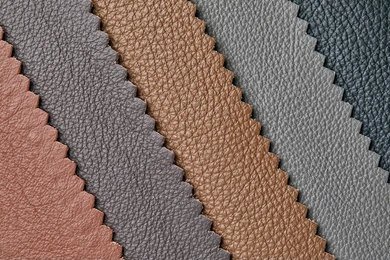
Quality leather shows an irregular, natural grain pattern with pores that vary in size and spacing. Corrected grain and synthetic leather show a repeated, symmetrical pattern, since manufacturers stamp it on with a heated press. Buyers can compare pores under a magnifier. Real, high-grade leather never repeats the exact same pattern across a hide.
Look for Natural Marks and Texture
Natural marks, such as healed scars, insect bites, wrinkles and stretch marks, indicate full grain leather and confirm that tanners left the hide’s surface untouched. A completely flawless, uniform surface across a large hide often points to heavy correction or a synthetic material. Buyers should treat these marks as signs of an authentic hide, not defects.
Inspect Colour Consistency
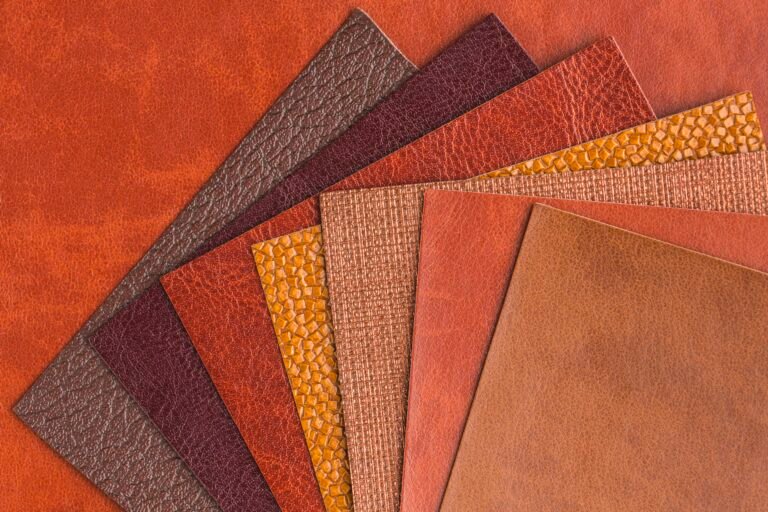
Quality leather, when dyed with aniline or semi-aniline methods, shows depth and slight variation in colour across the hide. Heavily pigmented or painted leather shows a flat, uniform colour with no visible depth, and this signals a lower grade or corrected surface. Buyers should check the edges and folds of a hide. Colour that changes or shows a different base tone underneath usually points to surface coating rather than true dye penetration.
Check the Surface Finish
Quality leather has a natural, slightly matte to low-sheen surface with a soft handfeel, not a glossy, plastic-like coating. A thick, glossy topcoat usually hides surface defects and blocks breathability, and this increases sweat and reduces comfort in footwear and garments. Buyers can press a fingernail lightly into the surface. Genuine, well-tanned leather springs back and shows a faint mark, while heavily coated or synthetic leather stays creased or cracks at the press point.
Look for Cracks, Peeling or Flaking
Cracks, peeling or flaking on new leather point to a weak surface coating, poor tanning or a synthetic backing. Genuine, well-finished leather bends without cracking and shows fine wrinkles at the fold, not a permanent white line. Buyers should fold a sample at a sharp angle and check the crease. A crease that turns white or splits open signals low tensile strength and poor finish adhesion.
How to Identify Quality Leather by Touch and Feel
Touch tests reveal leather quality through 4 checks: texture, flexibility, softness and firmness, and thickness and weight.
Feel the Texture
Quality leather feels warm, slightly grainy and full under the palm, not cold, smooth or plastic-like. Full grain and top grain leather show a tighter, denser handfeel, since their fibre structure stays intact through tanning. Split, bonded and synthetic leather feel thinner, spongier or rubbery. Their added coatings and backings change the natural handfeel.
Check Flexibility
Quality leather bends smoothly and returns to its original shape without stiff resistance or a plastic snap. Buyers can fold a sample in half and release it. Well-tanned leather shows fine, natural wrinkles at the fold and flattens back out within seconds. Stiff, brittle leather that resists folding, or leather that stays creased, usually contains excess coating or an inferior tanning process.
Test Softness and Firmness
Quality leather balances softness with structure, offering enough give to mould to use while holding its shape under normal handling. Overly soft, mushy leather often signals over-tanning or excess fat liquoring, which weakens the fibre structure over time. Overly stiff, board-like leather usually points to under-tanning or a heavy synthetic coating that restricts natural movement.
Check Thickness and Weight
Quality leather thickness typically ranges from 0.8 mm (0.03 in) for garments to 3 mm (0.12 in) for belts and soles, depending on the product. Consistent thickness across a hide confirms controlled splitting and shaving during tanning. Uneven thickness, thin spots or a light, hollow feel for the size of the piece usually signal a lower-grade or heavily processed hide.
How to Identify Quality Leather by Smell
Quality, well-tanned leather carries an earthy, slightly sweet, natural smell that comes from tannins, natural oils and the hide itself. Vegetable-tanned leather often carries a stronger, woody scent. Plant tannins remain active in its fibre. Chrome-tanned leather carries a milder, neutral smell with no sharp chemical edge.
Synthetic, bonded or heavily coated leather carries a sharp plastic, rubber or chemical smell that comes from PU, PVC or solvent-based adhesives. Buyers can smell a sample close to the surface and near a cut edge. A strong chemical smell at the edge usually confirms a synthetic or heavily processed material.
How to Identify Quality Leather by Strength and Durability
Leather strength and durability depend on 5 factors: tensile strength, tear resistance, abrasion resistance, flexing resistance and water absorption behaviour.
Tensile Strength
Tensile strength measures how much pulling force leather withstands before it tears apart, recorded in Newtons per square millimetre (N/mm²) or pounds per square inch (psi). Full grain leather shows the highest tensile strength among all leather types. Its fibre structure stays continuous and dense through tanning, unlike split or bonded leather, which contain broken or reconstructed fibres.
Tear Resistance
Tear resistance measures how much force leather withstands once a cut or weak point starts to split further, recorded in Newtons (N). Leather with tight, interwoven fibres, such as full grain and top grain, resists tearing better than split or bonded leather, which have loose or reconstructed fibres. Low tear resistance shows up quickly at stitch holes, corners and stress points on bags and wallets.
Abrasion Resistance
Abrasion resistance measures how much surface rubbing leather withstands before it shows wear. Testers run leather samples through thousands of rubbing cycles on a Martindale or Taber abrasion machine. Quality leather resists surface breakdown across a high number of cycles, while thin or heavily coated leather wears through faster and exposes the backing underneath. Footwear, upholstery and bags need higher abrasion resistance. These products face constant contact and friction during use.
Flexing Resistance
Flexing resistance measures how much repeated bending leather withstands before cracks form on its surface or coating. Testers use a flexometer to bend a sample thousands of times and check for surface damage. Quality leather passes tens of thousands of flex cycles without cracking. Leather with a weak coating or dry fibre structure cracks early, often at the same fold repeatedly.
Water Absorption Behaviour
Water absorption behaviour measures how much moisture leather takes in over a set time, recorded as a percentage of dry weight. Vegetable-tanned and full grain leather absorb water gradually and darken at the contact point, then dry out and return to a similar shade. Heavily coated, synthetic or poorly finished leather either repels water completely or absorbs it too fast, and this causes swelling, curling or staining.
The American Society for Testing and Materials (ASTM) states that leather standards help test and evaluate the physical and chemical properties of leather for quality, workmanship and satisfactory use. ASTM notes that tensile strength testing gives a reliable indication of leather quality.
Common Signs of Poor-Quality Leather
Poor-quality leather shows through 7 common signs: artificial grain pattern, uneven dyeing, weak surface coating, loose grain, chemical smell, cracking or peeling, and low tear strength.
Artificial Grain Pattern
An artificial grain pattern repeats the same shape, pore size and spacing across the entire hide, since manufacturers stamp it on with a heated press. Real, natural grain never repeats in this way. Buyers can spot artificial patterns fastest along seams and corners, where the repeated stamp lines up in blocks.
Uneven Dyeing
Uneven dyeing shows patches, streaks or a lighter tone at the edges and folds of a hide. This defect signals a rushed or low-quality tanning process, poor pigment penetration or an attempt to cover surface damage with a heavier dye coat. Quality leather takes dye evenly across its surface, since a uniform fibre structure absorbs colour at a consistent rate.
Weak Surface Coating
A weak surface coating peels, flakes or rubs off within weeks of normal use, especially at high-contact points such as corners, handles and edges. Manufacturers apply a heavy coating to cover a low-grade base, and this fails faster than a natural, well-tanned grain surface. Buyers can test a coating by rubbing a white cloth firmly across the surface. Colour transfer onto the cloth signals a weak or unstable finish.
Loose Grain
Loose grain leather shows a surface that separates slightly from the layer underneath, and this creates a soft, spongy or bubbly feel when pressed. This defect comes from over-liming, poor fat content or damage during the tanning process. Loose grain leather cracks and breaks down faster than tight-grain leather, since the surface and fibre base no longer move together.
Chemical Smell
A sharp chemical, plastic or rubber smell points to synthetic material, a heavy PU or PVC coating, or leftover tanning chemicals that weren’t washed out properly. Quality leather never carries this smell, even at a cut edge. Buyers should treat a strong chemical odour as a warning sign for both quality and safety.
Cracking or Peeling
Cracking or peeling on leather within months of purchase points to a weak fibre structure, poor tanning or a thin synthetic coating over a low-grade base. Quality leather develops fine surface wrinkles with age, not hard cracks or flaking patches. Buyers should check high-flex points, such as wallet folds and bag handles, for early crack lines before purchase.
Low Tear Strength
Low tear strength shows up as small rips that spread quickly from stitch holes, corners or worn edges. This defect comes from loose or reconstructed fibres, common in split, bonded and heavily corrected leather. Buyers can gently tug at a stitch hole on a sample or offcut. Leather with high tear strength resists spreading, while weak leather rips further with light pressure.
Leather Grades Explained: Which Leather Is Better Quality?
Full grain and top grain leather rank as the highest-quality leather grades, followed by corrected grain, split leather and bonded leather in that order.
Full Grain vs Top Grain Leather
Full grain leather keeps its natural grain, pores and marks intact, while top grain leather goes through light sanding and buffing to remove marks and create an even surface. Full grain leather offers higher breathability and a deeper patina over time. Top grain leather offers a smoother, more consistent look at a slightly lower cost. Both grades come from the same top layer of the hide and rank above corrected grain, split and bonded leather in durability.
Corrected Grain vs Split Leather
Corrected grain leather comes from the same top layer as full grain and top grain leather. Tanners heavily sand it and emboss it with an artificial pattern. Split leather comes from the lower, fibrous layer of the hide, left over after tanners remove the top grain. Corrected grain leather offers better strength and structure than split leather, since it retains a denser fibre layer beneath its corrected surface.
Bonded Leather vs Genuine Leather
Bonded leather contains shredded leather fibres mixed with a bonding agent, while genuine leather, a marketing term for split leather, contains a full layer of low-grade hide coated and embossed to look like higher grades. Genuine leather offers more durability than bonded leather, since it uses one continuous hide layer instead of pressed scraps. Both grades rank below full grain, top grain and corrected grain leather in strength, breathability and lifespan.
Natural Leather vs Synthetic Leather
Natural leather comes from an animal hide and develops a patina, absorbs moisture and breathes over years of use. Synthetic leather contains no animal hide and consists of a fabric base coated with polyurethane or PVC. Natural leather costs more and lasts longer under normal use. Synthetic leather costs less, offers a uniform appearance and suits products that need consistent colour, water resistance or a lower price point.
Leather Quality Chart: Quick Comparison of Leather Grades
This leather quality chart compares 6 leather grades across grain, durability, breathability, patina and common uses.
| Leather Grade | Grain | Durability | Breathability | Patina | Common Uses |
|---|---|---|---|---|---|
| Full Grain | Natural, unaltered | Highest | High | Rich, develops over years | Boots, belts, premium bags |
| Top Grain | Lightly sanded | High | Moderate | Moderate | Garments, structured bags |
| Corrected Grain | Sanded and embossed | Moderate | Low | Slow or minimal | Footwear, upholstery |
| Split / Genuine | Fibrous, no grain | Low | Very low | None | Belts, linings, furniture |
| Bonded | Artificial, pressed | Very low | None | None | Book covers, budget furniture |
| Synthetic (PU/PVC) | Printed | Low to moderate | None | None | Fashion bags, budget footwear |
Visual Inspection vs Laboratory Testing: What Is More Reliable?
Laboratory testing gives a more reliable result than visual inspection for leather quality. Instruments measure exact values for strength, chemical content and durability, while eyes and hands can only judge surface-level traits. Visual and touch checks catch obvious grain, colour and surface defects fast.
These checks can’t detect chromium content, tensile strength in Newtons, or compliance with buyer-specific chemical limits. Manufacturers and exporters use visual inspection for quick, first-stage screening, and they rely on lab testing before shipment, contract approval or bulk production runs.
Laboratory Tests Used to Identify Quality Leather
Laboratories run 12 core tests to identify leather quality: thickness, tensile strength, tear strength, abrasion resistance, flexing resistance, colour fastness, water absorption, finish adhesion, chemical content, Chromium VI, heavy metals and RSL compliance.
Thickness Testing
Thickness testing measures leather in millimetres (mm) or ounces (oz) using a dial or digital thickness gauge at multiple points on a hide. Consistent thickness across a hide confirms controlled splitting and shaving during tanning.
Tensile Strength Testing
Tensile strength testing pulls a leather sample apart at a controlled speed and records the force it withstands in Newtons per square millimetre (N/mm²) before it breaks. This test confirms whether leather meets the minimum strength needed for straps, handles and load-bearing parts.
Tear Strength Testing
Tear strength testing measures the force needed to spread a small cut through a leather sample, recorded in Newtons (N). This test predicts how leather performs at stitch holes, corners and stress points on finished products.
Abrasion Resistance Testing
Abrasion resistance testing rubs a leather sample against a standard material for a set number of cycles on a Martindale or Taber machine, then checks for surface damage. This test predicts leather performance in footwear, upholstery and bags exposed to constant friction.
Flexing Resistance Testing
Flexing resistance testing bends a leather sample repeatedly on a flexometer and counts the cycles before cracks appear. This test confirms whether a coating or finish holds up under repeated folding, common in shoes, wallets and bags.
Colour Fastness Testing
Colour fastness testing checks how much dye transfers from leather onto a white cloth under rubbing, light exposure or perspiration, rated on a grey scale from 1 to 5. A higher rating confirms stable, well-penetrated dye that resists fading and transfer.
Water Absorption Testing
Water absorption testing submerges a leather sample in water for a set time and measures the weight gained as a percentage. This test confirms how leather responds to moisture in footwear, bags and outdoor products.
Finish Adhesion Testing
Finish adhesion testing checks how firmly a surface coating bonds to the leather beneath it, often through a cross-cut or tape-pull method. Weak adhesion results in peeling, flaking or cracking within months of use.
Chemical Testing
Chemical testing screens leather for restricted substances, pH levels and formaldehyde content against buyer and regulatory limits. This test confirms leather safety for products that touch skin directly, such as gloves, garments and footwear linings.
Chromium VI Testing
Chromium VI testing detects hexavalent chromium, a restricted and harmful compound that can form during or after chrome tanning under certain conditions. Most international buyers require Chromium VI levels below 3 mg/kg (parts per million) for compliance.
Heavy Metal Testing
Heavy metal testing checks leather for lead, cadmium, mercury and arsenic content against restricted substance limits. This test confirms leather safety for children’s products, garments and accessories sold in regulated markets.
RSL Compliance Testing
Restricted Substances List (RSL) compliance testing checks leather against a buyer’s or region’s full list of banned or limited chemicals, which often includes azo dyes, phthalates and Chromium VI together. Exporters use RSL testing to confirm a shipment meets every requirement before it reaches a specific retailer or market.
The International Organization for Standardization (ISO) lists multiple leather-specific physical and mechanical testing methods, including water absorption testing. The American Society for Testing and Materials (ASTM) provides leather standards for evaluating both physical and chemical properties.
Leather Quality Testing Standards
Leather quality testing follows 4 main standard categories: ISO standards, ASTM standards, buyer-specific requirements and export compliance requirements.
ISO Leather Testing Standards
The International Organization for Standardization (ISO) publishes leather-specific test methods for thickness, tensile strength, tear strength, colour fastness and water absorption, among other physical and mechanical properties. Laboratories and tanneries reference ISO standards to keep test results consistent across countries and buyers.
ASTM Leather Testing Standards
The American Society for Testing and Materials (ASTM) publishes leather standards that cover physical and chemical property testing, along with workmanship requirements for finished leather goods. Manufacturers and exporters use ASTM standards for products bound for markets across the Americas.
Buyer-Specific Testing Requirements
Large retailers and brands often set testing requirements above ISO and ASTM minimums, with specific limits for chemical content, colour fastness ratings or tear strength values. Exporters need a copy of each buyer’s testing manual before production, since requirements vary widely between retailers.
Export Compliance Requirements
Export compliance requirements combine destination-country regulations, buyer specifications and RSL limits into one testing checklist before shipment. Common requirements include Chromium VI limits, heavy metal limits, formaldehyde limits and azo dye restrictions. Exporters who confirm compliance before shipment avoid customs delays, shipment rejection and financial penalties.
How Manufacturers Can Identify Leather Quality Before Production
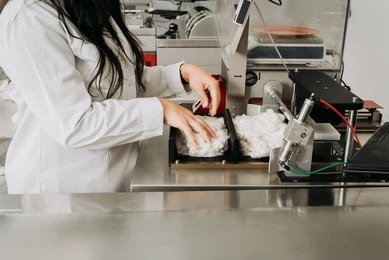
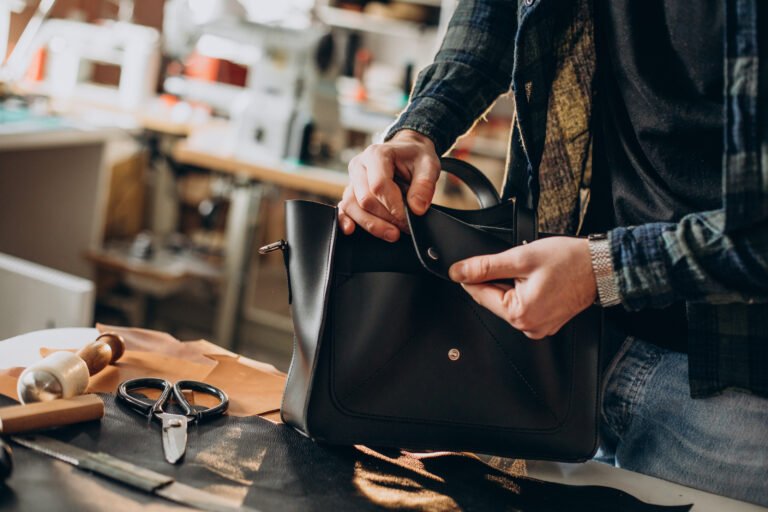
Manufacturers can identify leather quality before production by combining sensory checks with lab-tested samples from every new hide batch. A sensory check on grain, texture, smell and flexibility catches obvious defects within minutes and at no cost. A lab test on a small sample from the same batch confirms tensile strength, thickness and chemical safety before a full production run starts.
Manufacturers who skip batch testing risk full production runs made from an inconsistent or non-compliant hide lot. Working with a verified, repeat supplier and requesting test certificates for each shipment reduces this risk further.
How Exporters Can Avoid Leather Quality Rejection
Exporters can avoid leather quality rejection by testing every shipment against the buyer’s exact requirements before it leaves the factory. Common rejection causes include Chromium VI levels above the buyer’s limit, tear strength below the minimum, uneven colour fastness ratings and undisclosed synthetic content in a “genuine leather” shipment.
Exporters who run a full lab test panel, including RSL compliance, before shipment catch these issues early, at a fraction of the cost of a returned or rejected order. A third-party test report builds trust with new buyers who haven’t worked with a supplier before.
How Brands and Buyers Can Verify Leather Quality
Brands and buyers can verify leather quality by requesting a third-party lab test report alongside supplier claims and physical samples. A test report confirms tensile strength, thickness, colour fastness and chemical safety with exact figures, not marketing terms such as “genuine” or “premium.”
Buyers should request a signed material declaration that states the exact leather grade, tanning method and country of origin. Cross-checking a supplier’s samples against their test reports on a regular basis catches quality drift before it reaches finished products.
Leather Quality Testing in Pakistan
Leather quality testing in Pakistan supports manufacturers, tanneries and exporters across Karachi, Lahore and other production centres.
Leather Testing in Karachi
Karachi hosts a large share of Pakistan’s leather tanneries, garment units and export houses, and this creates constant demand for lab testing on-site or nearby. Manufacturers in Karachi need fast turnaround on tests such as tensile strength, Chromium VI and colour fastness to meet export shipment deadlines.
Leather Testing in Lahore
Lahore houses a large number of leather goods manufacturers, footwear brands and garment exporters, with strong demand for both physical and chemical leather testing. Brands in Lahore use lab testing to confirm quality before bulk production and before shipment to international buyers.
Leather Testing Across Pakistan
Leather production spans multiple cities across Pakistan, including Karachi, Lahore, Sialkot and Kasur, each with tanneries, garment units or footwear manufacturers. Testing labs that serve multiple cities give manufacturers and exporters consistent results, regardless of where in Pakistan a shipment originates.
How SAB Labs Helps Identify Quality Leather
SAB Labs helps manufacturers, exporters and brands identify quality leather through physical, mechanical and chemical testing under ISO and ASTM standards.
We tests leather for thickness, tensile strength, tear strength, abrasion resistance and flexing resistance under standard ISO and ASTM test methods. These results confirm whether a leather batch meets the strength and durability needed for its intended product, from wallets to footwear to upholstery.
Chemical, RSL and Heavy Metal Testing
SAB Labs tests leather for Chromium VI, heavy metals, formaldehyde and full RSL compliance against buyer and regional requirements. This testing confirms leather safety for products that touch skin directly and for shipments bound for regulated export markets.
Testing Support for Manufacturers, Exporters and Brands
SAB Labs supports manufacturers with pre-production batch testing, supports exporters with pre-shipment compliance panels, and supports brands with third-party verification reports for supplier claims. Clients across Karachi, Lahore and other cities in Pakistan use these reports to confirm leather grade, safety and compliance before goods move forward in the supply chain.
Final Thoughts on How to Identify Quality Leather
Identifying quality leather means combining visual checks, touch tests, smell tests and strength tests with lab-confirmed results before a final decision. Full grain and top grain leather remain the top choices for durability, breathability and long-term value, while split, bonded and synthetic leather suit lower-cost, shorter-life products.
Manufacturers, exporters and brands who pair sensory checks with ISO and ASTM lab testing catch quality and compliance issues before they reach a shipment or a customer. SAB Labs supports this process through leather testing in Karachi, Lahore and across Pakistan, covering physical, mechanical, chemical, RSL and heavy metal testing for every stage of production and export.
FAQs About How to Identify Quality Leather
How can you tell if leather is high quality?
High-quality leather feels warm and slightly grainy, bends without cracking, and carries a natural, earthy smell rather than a chemical one. A full grain or top grain label, even colour depth, and consistent thickness confirm the grade further.
What is the best quality leather?
Full grain leather is the best quality leather. It keeps the hide’s complete, natural grain layer intact and offers the highest tensile strength, breathability and patina development among all leather types.
Is full grain leather the highest quality?
Yes, full grain leather is the highest-quality leather grade available. It retains the entire grain layer, including natural marks, and outperforms top grain, corrected grain, split and bonded leather in strength and durability.
How do you identify real leather?
Real leather shows an irregular grain pattern, absorbs light moisture without curling, and carries a natural, earthy smell rather than a plastic one. A cut edge on real leather shows dense, tightly packed fibres, not a fabric or foam backing.
What are the signs of poor-quality leather?
Poor-quality leather shows an artificial, repeated grain pattern, uneven dyeing, a chemical smell and early cracking or peeling. Weak surface coating and low tear strength at stitch holes signal a lower grade too.
Can leather quality be checked without a lab test?
Yes, leather quality can be checked without a lab test through visual, touch, smell and bend tests. These checks catch obvious grain, texture and finish issues. Lab testing confirms exact strength values and chemical safety on top of these checks.
Which lab tests are used for leather quality?
Common lab tests for leather quality include tensile strength, tear strength, abrasion resistance, flexing resistance, colour fastness, water absorption, finish adhesion, Chromium VI, heavy metals and RSL compliance testing.
Why is leather testing important for exporters?
Leather testing confirms that a shipment meets buyer specifications, RSL limits and destination-country regulations before it leaves the factory. Exporters who skip testing risk shipment rejection, customs delays and financial penalties.
Where can I get leather quality testing in Pakistan?
SAB Labs provides leather quality testing in Karachi, Lahore and other cities across Pakistan, covering physical, mechanical, chemical, RSL and heavy metal testing for manufacturers, exporters and brands.