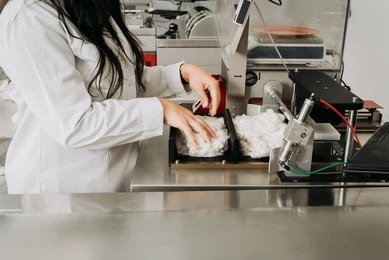
Textile testing refers to the procedures used to determine quality and properties throughout the textile product chain. It applies engineering facts and science to evaluate raw materials, production processes, and finished goods. This covers everything from raw fiber to the final garment.
Textile testing serves 7 core purposes: ensuring product quality, controlling the manufacturing process, detecting defects early, meeting buyer and regulatory requirements, supporting research and development, reducing product failures, and building brand trust.
Manufacturers, exporters, brands, quality control teams, and product developers all rely on textile testing to deliver safe, compliant, and consistent products.
The main components of a complete textile testing programme include physical testing, colour fastness testing, chemical and RSL testing, heavy metal testing, fibre composition testing, dimensional stability testing, and performance testing, all carried out under recognised standards such as ISO, ASTM (American Society for Testing and Materials), and AATCC (American Association of Textile Chemists and Colorists).
What Is Textile Testing?
Textile testing is the systematic evaluation of textile materials, including fibres, yarns, fabrics, and garments, to measure their quality, safety, and performance properties. It covers physical tests, chemical tests, colour fastness tests, and composition analysis carried out in a laboratory using calibrated equipment and standardised test methods.
Textile testing produces objective data about a product. Manufacturers use that data to make decisions about raw material acceptance, production adjustments, and final product release.
Why Textile Testing Matters in the Textile Supply Chain
The textile supply chain runs from raw fibre through spinning, weaving or knitting, dyeing and finishing, garment manufacturing, and on to the end consumer. At every stage, material properties change. Without testing, defects and non-conformances pass forward through the chain and become more expensive to fix with every step.
Textile testing gives everyone in the supply chain: spinners, weavers, dyers, garment makers, and brands. accurate information at the right time. It reduces risk, prevents waste, and supports consistent quality from one production batch to the next.
Difference Between Textile Testing, Fabric Testing and Garment Testing
Textile testing is the broadest term. It covers all forms of testing applied to any textile material at any stage, including fibre, yarn, fabric, and garments.
Fabric testing focuses specifically on woven, knitted, or nonwoven fabrics. Tests include tensile strength, GSM (grams per square metre), pilling, shrinkage, colour fastness, and air permeability.
Garment testing evaluates the finished, assembled garment. Tests include seam strength, seam slippage, dimensional stability after washing, label compliance, and flammability for certain product categories.
All three fall under the textile testing umbrella and often overlap in practice, particularly when brands specify testing at both fabric and finished garment stage.
Who Needs Textile Testing?
Textile testing supports every party involved in producing, selling, or sourcing textile products:
Manufacturers use testing to control production quality, verify raw materials, and prepare documentation for buyers.
Exporters need test reports to meet destination market regulatory requirements, clear customs, and satisfy buyer quality programmes.
Brands and retailers rely on testing to confirm that products meet their own specifications, RSL (Restricted Substances List) requirements, and applicable safety standards.
Buying houses use test results to evaluate supplier performance and verify that bulk production matches pre-production approvals.
Quality control teams apply testing at incoming, in-process, and final inspection stages to maintain consistency across production runs.
Suppliers use testing to demonstrate product quality to buyers and to resolve disputes over material performance.
Product developers use testing during the development phase to validate new fabric constructions, finishes, and fibre blends before commercial production begins.
Importance of Textile Testing
The importance of textile testing shows up at every stage of the production cycle. It protects product quality, keeps manufacturing processes on track, satisfies buyer requirements, and reduces the financial risk of failure.
The following 8 points explain why manufacturers, exporters, and brands treat textile testing as a non-negotiable part of their operations.
To Ensure Product Quality
Textile testing ensures that every batch of fabric, yarn, or garment meets the quality standard set by the buyer or brand. Without testing, quality variation between production batches goes undetected until the product reaches the customer, at which point the cost of failure is at its highest.
Regular testing gives manufacturers measurable data on properties such as tensile strength, colour consistency, and GSM. That data makes quality control objective rather than visual or subjective.
To Check the Suitability of Raw Materials
Raw materials vary between suppliers and between shipments. A yarn that meets specification in one batch may fall short in the next due to differences in fibre maturity, waste percentage, or blend composition.
Textile testing allows manufacturers to check incoming raw materials before committing them to production. Unsuitable material gets rejected or quarantined before it enters the production line, not after it has been converted into finished goods.
To Control the Manufacturing Process
Testing during production, known as in-process quality control, identifies process drift before it produces large quantities of non-conforming material. Dyeing faults, finishing inconsistencies, weave defects, and GSM variation all show up in test data before bulk production is affected.
Manufacturers who test during production respond faster to problems, reduce waste, and maintain tighter tolerances on key product parameters.
To Detect Fabric, Yarn and Garment Defects Early
Early defect detection reduces the cost and disruption of quality failures. A colour fastness problem identified at greige fabric stage costs far less to address than the same problem discovered after garment production is complete, or even after shipment.
Textile testing detects 8 common defect types early: poor colour fastness, excessive shrinkage, low fabric strength, pilling, incorrect fibre composition, harmful chemical residues, GSM variation, and seam or stitching failures.
To Improve Customer Satisfaction and Brand Trust
Consistent product quality builds customer loyalty. When consumers receive garments that maintain their colour, shape, and strength through repeated washing and wear, they trust the brand. When garments fail early through fading, shrinking, or pilling, brand reputation suffers.
Textile testing gives brands the data to guarantee consistent performance. It also provides evidence of due diligence when customer complaints arise.
To Support Product Development and Research
New product development in textiles depends on testing. When manufacturers develop new fabric constructions, test a new dyestuff, or apply a new finish, testing tells them whether the modified product performs as intended, or whether it has introduced new problems.
Research and development departments use test data to compare material options, optimise production parameters, and validate performance claims before a new product reaches the market.
To Meet Buyer, Export and Regulatory Requirements
Buyers, brands, and importing market regulators all impose specific requirements on textile products. These include RSL requirements, chemical limits, flammability standards, labelling rules, and performance specifications.
Textile testing produces the documented evidence that a product complies with these requirements. Without test reports from a recognised laboratory, exporters cannot demonstrate compliance, and buyers will not accept shipments.
To Reduce Product Failure, Rejections and Returns
Product failure, whether in the field or at buyer inspection, generates direct financial loss through rejection, rework, or return. It also damages commercial relationships and brand reputation.
Testing before shipment reduces the risk of failure at the customer end. When testing identifies a problem before dispatch, the manufacturer retains control over how to resolve it. Once a shipment ships, resolution becomes more expensive and more damaging.
Main Reasons for Textile Testing
Textile testing is not carried out without reason. Every test adds cost, and that cost only makes sense when it adds value to the final product or prevents a more expensive problem later. There are 7 clear points in the production cycle where testing delivers that value, from the arrival of raw materials to the departure of the finished shipment.
Checking Raw Materials Before Production
The production cycle begins with raw material delivery. A spinner receives raw fibre. A weaver receives yarn. A garment maker receives finished fabric. At each stage, the incoming material must meet defined specifications before processing begins.
If substandard raw material enters the production line, producing a quality final product becomes very difficult, regardless of how well the subsequent processes are managed. Testing incoming materials covers fibre length, tenacity, and maturity for fibres; count, evenness, and strength for yarn; GSM, tensile, and colour consistency for fabric. This prevents substandard material from progressing further in the production cycle.
Monitoring Quality During Production
Production monitoring through in-process testing is the foundation of quality control. Samples taken from the production line at defined intervals give a real-time picture of product consistency. Statistical analysis of those samples reveals whether the process is within tolerance or drifting toward non-conformance.
Effective production monitoring requires well-designed sampling procedures, calibrated test equipment, trained operators, and reliable laboratory facilities.
Assessing the Final Textile Product
Before bulk production releases to the customer, final inspection and testing confirm that the finished material meets all agreed specifications. Final testing often includes dimensional stability, colour fastness, tensile properties, and chemical compliance checks.
Final assessment happens after production, so it cannot change the material already produced. Its purpose is to confirm acceptance, identify material that needs rework, and prevent non-conforming goods from reaching the buyer.
Investigating Faulty or Rejected Materials
When faulty material appears, either at final inspection or through a buyer complaint, investigation identifies the root cause. Was the problem in the raw material, the dyeing process, the finishing step, or the garment make?
Clear root cause identification allows the manufacturer to take corrective action that prevents recurrence. Independent laboratories play an important role here: they provide unbiased technical opinions in cases where disputes arise between suppliers and buyers.
Developing New Fabrics, Yarns and Garments
Before any new textile product reaches the market, testing verifies that the modified material performs as intended and that faster or lower-cost production methods have not degraded product quality.
New product development testing covers performance under end-use conditions: wash durability, mechanical strength, chemical safety, and functional properties such as water repellency or UV protection.
Comparing Supplier Quality
Manufacturers and brands often source materials from multiple suppliers. Testing provides objective, comparable data that supports supplier evaluation and selection. Suppliers whose materials consistently meet specification receive preference. Those whose materials fall short get placed on corrective action plans.
Verifying Compliance Before Shipment
Pre-shipment verification confirms that bulk production meets buyer, brand, and regulatory requirements before the goods leave the factory. This is the final checkpoint in the production cycle and the last opportunity to identify and address non-conformances before they become the buyer’s problem.
Types of Textile Testing
Textile testing covers a wide range of test categories, each designed to measure a specific aspect of material performance or safety. Buyers and regulators specify different combinations depending on the product type and destination market. The 10 main types of textile testing are described below.
Physical Testing
Physical testing measures the mechanical and structural properties of textile materials. Standard physical tests include:
Tensile strength measures the force required to break a fabric sample under controlled conditions. ISO 13934 and ASTM D5035 are the common methods used.
Tear strength measures resistance to tear propagation in woven fabrics. ISO 13937 and ASTM D1424 cover this test.
Bursting strength applies to knitted fabrics and nonwovens, measuring resistance to a multidirectional force. ISO 13938 applies.
Abrasion resistance assesses fabric durability under repeated surface rubbing using the Martindale or Wyzenbeek method.
Pilling evaluates the tendency of a fabric to form surface pills under rubbing or wear. ISO 12945 and ASTM D3512 are used.
Seam slippage measures the force required to cause yarns to slip at a seam, important for woven apparel fabrics.
GSM testing measures fabric weight in grams per square metre, a fundamental parameter for specification compliance and raw material consistency.
Colour Fastness Testing
Colour fastness testing evaluates how well a fabric retains its colour under specific conditions. Poor colour fastness leads to staining of adjacent fabrics, fading, and buyer rejection.
Standard colour fastness tests include:
Colour fastness to washing (ISO 105-C06 evaluates colour change and staining after domestic or commercial laundering).
Colour fastness to rubbing (crocking) (ISO 105-X12 measures colour transfer to a white cloth under dry and wet rubbing).
Colour fastness to perspiration (ISO 105-E04 assesses colour stability in contact with acidic and alkaline perspiration solutions).
Colour fastness to water (ISO 105-E01 evaluates colour stability when the fabric contacts water).
Colour fastness to light (ISO 105-B02 measures fading under artificial light exposure, important for apparel and home textile applications).
Colour fastness to dry cleaning (ISO 105-D01 applies to dry clean-only garments and apparel fabrics).
Chemical Testing
Chemical testing identifies the presence of harmful or restricted substances in textile materials. Key chemical tests include:
pH testing measures the acidity or alkalinity of a fabric, important for skin safety, particularly in products for infants.
Formaldehyde testing detects free and hydrolysable formaldehyde, which is restricted under multiple international regulations including OEKO-TEX and REACH.
Azo dye testing screens for azo dyes that can release carcinogenic aromatic amines. EU Regulation 2016/1179 and REACH restrict specific azo colourants.
Restricted substances screening covers broad chemical analysis covering substances restricted by REACH, California Proposition 65, and other regulations.
Harmful chemical screening includes phthalates, organotin compounds, flame retardants, and other substances subject to regulatory limits.
RSL Testing
RSL (Restricted Substances List) testing verifies that a textile product contains no chemicals banned or limited by the buyer’s own requirements. Major brands and retailers, including those operating under ZDHC (Zero Discharge of Hazardous Chemicals) guidelines, maintain their own RSLs in addition to regulatory requirements.
RSL testing supports export compliance, brand programme adherence, and market access for garments and home textiles sold in regulated markets such as the EU, US, and UK.
Heavy Metal Testing
Heavy metals enter textile products through dyes, pigment prints, mordants, and trim components. Regulated metals in textiles include lead, cadmium, chromium (VI), mercury, arsenic, and antimony.
Heavy metal testing screens for these substances in fabric, yarn, dyes, inks, buttons, zips, and other components. Buyers and importing market regulators impose strict limits, particularly for products intended for children or for direct skin contact. ICP-MS (Inductively Coupled Plasma Mass Spectrometry) is the standard analytical method.
Fibre Composition and Identification Testing
Fibre composition testing verifies that a textile product contains the fibre types and percentages stated on its label. Consumers and regulators rely on fibre content declarations to make purchasing decisions and to ensure labelling compliance.
Standard fibre identification methods, including microscopy and chemical dissolution, determine the fibre types present. Quantitative analysis then establishes the blend percentages. This is critical for care labelling compliance and for products marketed as natural fibre, organic, or recycled content.
Dimensional Stability and Shrinkage Testing
Dimensional stability testing measures how much a fabric changes in size after washing, dry cleaning, or other conditioning processes. Results are expressed as percentage change in length and width.
Excessive shrinkage is one of the most common causes of buyer rejection and consumer complaints. Testing before bulk production release allows manufacturers to address shrinkage issues through relaxation treatment, finishing adjustments, or revised washing instructions, before goods reach the customer.
Flammability Testing
Flammability testing measures how quickly a textile material ignites and burns. Regulatory requirements for flammability vary by product category and destination market.
Children’s sleepwear, upholstery fabrics, protective clothing, and technical textiles all carry specific flammability requirements. Common standards include BS 5722, EN 1103, ASTM D1230, and the US 16 CFR Part 1615/1616 for children’s sleepwear.
Air Permeability and Performance Testing
Air permeability testing measures the volume of air that passes through a fabric per unit time under a defined pressure differential. It is relevant for sportswear, workwear, and technical textiles where breathability or wind resistance matters.
Performance testing also covers properties such as moisture wicking, thermal resistance, UV protection factor (UPF), antimicrobial performance, and stretch recovery, each tested under the relevant standard for the intended end use.
Water Repellency and Moisture Management Testing
Water repellency testing evaluates a fabric’s resistance to surface wetting. The spray test (ISO 4920) and the hydrostatic head test (ISO 811) measure different aspects of water resistance: surface wetting resistance and resistance to water penetration under pressure, respectively.
Moisture management testing, relevant to activewear and base layers, measures how efficiently a fabric moves moisture away from the skin. AATCC 195 is the standard most widely used for moisture management performance.
Textile Testing Standards and Methods
Textile testing only produces useful results when the right method is applied correctly. Standards set by recognised bodies define exactly how each test must be conducted, what equipment to use, and how to interpret results. Without standardised methods, test data from different laboratories cannot be compared or trusted.
Why Standardised Testing Methods Are Important
Standardised test methods produce results that are reproducible, comparable, and defensible. When a laboratory in Karachi and a laboratory in London both test the same fabric using ISO 13934, their results should align within the stated tolerance of the method. This comparability matters for international trade and for resolving disputes between buyers and suppliers.
Without standardised methods, test results cannot be compared across laboratories, buyers, or production batches. Testing loses its value as a quality management tool.
Common Textile Testing Standards
The 5 main standard-setting bodies relevant to textile testing are:
ISO (International Organization for Standardization) issues the most widely referenced textile test methods globally, covering physical, chemical, and colour fastness tests.
ASTM International produces extensively used standards in the US and North American markets, including ASTM D series for fabric physical testing.
AATCC (American Association of Textile Chemists and Colorists) specialises in colour fastness, chemical, and functional performance test methods, widely specified by US brands.
BS (British Standards) includes historic and current UK textile standards, several of which align with or have been replaced by EN standards.
EN (European Standards) covers textile testing requirements for products sold in the EU, including EN standards for protective clothing, children’s products, and upholstery.
Buyers and brands specify the applicable standard in their product technical specifications. Laboratories carry out testing against those specified methods and report results accordingly.
Buyer-Specific Textile Testing Requirements
In addition to regulatory standards, many brands and retailers publish their own testing protocols. These buyer-specific requirements often exceed regulatory minimums, covering additional test parameters, tighter performance thresholds, or more extensive chemical screening.
Manufacturers exporting to major brands need to understand the specific requirements of each buyer, not just the applicable regulation. A garment acceptable under REACH may still fail a brand’s RSL if it contains a substance the brand has placed on its own restricted list.
Importance of Accurate and Reliable Test Reports
A test report is only as good as the laboratory that produces it. Accurate, reliable test reports require calibrated equipment, validated test methods, trained analysts, and proper sample conditioning.
Buyers, customs authorities, and certification bodies all accept test reports as evidence of compliance. Reports from laboratories with recognised accreditation carry greater weight in commercial and regulatory decisions.
Role of ISO-Certified Testing Laboratories
ISO-certified laboratories accredited under ISO/IEC 17025 operate under a quality management system that covers test method competence, equipment calibration, sample handling, and result reporting. Accreditation demonstrates that the laboratory produces technically valid results.
For exporters and brands, using an ISO/IEC 17025-accredited laboratory reduces the risk of test result disputes and provides credible compliance documentation for both buyers and regulators.
Textile Testing Process: How It Works
Textile testing follows a structured process from the moment a sample arrives at the laboratory to the point where the final report reaches the client. Each step serves a specific purpose and contributes to the accuracy and reliability of the result. The process runs across 7 steps.
Step 1: Sample Submission
The testing process begins with sample submission. The manufacturer or exporter submits the material to be tested, whether fabric, yarn, garment, or component, to the laboratory, along with a sample submission form specifying the required tests, applicable standards, and any buyer or regulatory references.
Step 2: Understanding the Buyer or Product Requirement
The laboratory reviews the test request against the specified standard and buyer requirements. For complex requests or export programmes, the laboratory may confirm the test scope with the client before proceeding to ensure that all required parameters are covered.
Step 3: Sample Conditioning and Preparation
Most textile test methods require samples to be conditioned before testing, typically at 20°C ± 2°C and 65% ± 2% relative humidity for a minimum period of 24 hours. This ensures that moisture content in the fabric does not affect test results.
Test specimens are then cut from the submitted sample according to the dimensions specified in the relevant test method.
Step 4: Laboratory Testing
Trained analysts carry out each test using calibrated equipment and the specified method. Physical tests, colour fastness assessments, and chemical analyses all follow defined procedures with documented parameters.
Step 5: Result Analysis
Test results are compared against the applicable pass/fail criteria or buyer-specified performance requirements. Borderline results may require repeat testing or additional specimen evaluation.
Step 6: Test Report Issuance
The laboratory issues a formal test report containing the test method references, specimen details, test conditions, results, and pass/fail assessment. The report is signed or authorised by a responsible laboratory representative.
Step 7: Corrective Action and Retesting, If Required
Where test results fall outside the required specification, the manufacturer identifies the root cause, takes corrective action, and submits a new sample for retesting. The retest report provides confirmation that the corrective action resolved the non-conformance.
When Should Textile Testing Be Done?
The timing of textile testing determines how much value it delivers. Testing at the right stage catches problems early, when they are still low-cost to resolve. Testing too late, or not at all, leaves problems to surface at the buyer’s end. There are 6 key points in the product lifecycle when textile testing should take place.
Before Bulk Production
Testing before bulk production, at the lab dip, strike-off, or pre-production sample stage, catches problems while they are still cost-effective to fix. Colour fastness issues, shrinkage problems, and chemical non-conformances identified at this stage can be resolved before any bulk material is produced.
During Production
In-process testing monitors that production stays within the approved parameters. GSM, strength, and colour consistency checks at regular intervals during bulk production give early warning of process drift.
Before Shipment
Pre-shipment testing on finished goods confirms that the bulk production batch meets all buyer and regulatory requirements before dispatch. This is the final quality gate before goods leave the manufacturer’s control.
After Product Failure or Buyer Complaint
When a buyer rejects a shipment or a consumer complaint arises, laboratory investigation identifies the cause of failure. This supports claims resolution, corrective action planning, and future prevention.
Before Launching a New Textile Product
New product launches require validation testing to confirm that the product performs as intended across all relevant parameters: mechanical, chemical, colour fastness, and functional.
Before Exporting to a New Market
Different export markets carry different regulatory requirements. Before entering a new market such as the EU, US, Japan, or another destination, manufacturers test their products against that market’s specific standards and chemical restrictions to confirm compliance.
Benefits of Textile Testing for Manufacturers and Exporters
Textile testing is a cost, but it is one that pays back. Manufacturers and exporters who test consistently see fewer rejections, stronger buyer relationships, lower waste, and better compliance records. The 7 benefits below show where that return comes from.
Better Quality Control
Testing gives manufacturers measurable, objective quality data at every stage of production. This data replaces subjective visual assessment with reliable measurement, producing more consistent output and reducing the variation that leads to buyer rejections.
Lower Risk of Shipment Rejection
Shipment rejection, particularly for export, is costly. It generates direct financial losses, delays cash flow, damages buyer relationships, and sometimes triggers penalty clauses. Pre-shipment testing dramatically reduces the probability of rejection by confirming compliance before goods ship.
Improved Buyer Confidence
Buyers who receive consistent, well-documented test reports from suppliers develop confidence in those suppliers’ quality management. That confidence translates into longer-term commercial relationships, higher order volumes, and preferential supplier status.
Stronger Compliance with International Requirements
Regulatory requirements for textiles, covering chemical safety, labelling, and performance, are demanding and evolving. Regular testing keeps manufacturers current with requirements and provides documented evidence of compliance for every shipment.
Reduced Waste and Production Costs
Early defect detection through in-process testing reduces the volume of non-conforming material produced. Less rework, less rejected material, and fewer production disruptions lower total manufacturing cost per unit.
Safer Products for End Users
Chemical testing removes harmful substances from the product. Physical testing confirms that structural integrity is adequate for end use. The result is a product that is safe for the consumer, particularly important for children’s products, skin-contact garments, and protective textiles.
Better Reputation in Competitive Textile Markets
In competitive export markets, consistent quality and documented compliance differentiate one supplier from another. Manufacturers who invest in textile testing build a reputation for reliability that supports business development and customer retention.
Common Textile Defects Detected Through Testing
Testing identifies defects that visual inspection misses. Many quality problems in textiles only become visible under controlled laboratory conditions, after washing, or through chemical analysis. The 8 defects below are among the most common findings in textile testing and the most frequent causes of buyer rejection.
Poor Colour Fastness
Poor colour fastness is one of the most frequently detected defects in dyed and printed fabrics. Dyes that bleed during washing stain adjacent fabrics and garment components. Dyes that fade under light exposure produce uneven, washed-out appearances in wear.
Colour fastness testing to washing, rubbing, perspiration, and light identifies these problems before bulk production is released.
Excessive Shrinkage
Excessive shrinkage causes garments to change size after laundering, leading to consumer complaints and returns. Shrinkage above the tolerance specified in buyer requirements results in shipment rejection.
Dimensional stability testing measures shrinkage under defined wash conditions and allows manufacturers to take corrective action by adjusting finishing processes or revising care instructions, before bulk release.
Low Fabric Strength
Low tensile or tear strength indicates that a fabric will not withstand the mechanical stress of normal wear and care. Fabrics that tear, split at seams, or develop holes under regular use generate consumer complaints and damage brand reputation.
Tensile and tear strength testing verifies that fabric meets the minimum performance requirements for its intended end use.
Pilling and Abrasion Problems
Pilling, the formation of fibre balls on the fabric surface, is a common complaint in knitwear and blended fabrics. Abrasion damage occurs in high-wear areas such as collars, cuffs, and seat panels.
Pilling resistance and abrasion resistance testing predicts how the fabric will perform over time and allows fabric selection or finishing adjustments before production.
Incorrect Fibre Composition
Fibre content labels must accurately state the composition of the textile product. Incorrect labelling, whether intentional or due to poor raw material verification, constitutes a regulatory violation and a breach of consumer rights.
Fibre composition testing confirms that the declared blend matches the actual composition, supporting labelling compliance and buyer specification adherence.
Harmful Chemical Residues
Restricted substances, including formaldehyde, azo dyes that release carcinogenic amines, phthalates, and heavy metals, pose risks to consumer health and trigger regulatory action. Chemical and RSL testing screens for these substances and identifies products that require reformulation or retreatment before they can be exported.
Fabric Weight or GSM Variation
GSM (grams per square metre) variation between production batches affects garment weight, drape, and compliance with buyer specifications. Fabrics that fall outside the agreed GSM range face rejection at incoming inspection.
Regular GSM testing during production identifies weight drift early, allowing process adjustments before large quantities of out-of-spec material accumulate.
Seam and Stitching Failures
Seam slippage, seam strength failure, and stitching defects are among the most common causes of garment failure in wear. Seam testing assesses whether the fabric and thread construction will hold under the stresses of use and laundering.
Textile Testing Services Offered by SAB Labs
SAB Labs provides a full range of textile testing services for manufacturers, exporters, and brands across Pakistan. The laboratory covers physical, chemical, colour fastness, and compliance testing from facilities in Karachi and Lahore, supporting production quality control and export documentation requirements.
Textile Testing
SAB Labs provides comprehensive textile testing services covering physical, chemical, colour fastness, and functional performance parameters. Testing covers woven fabrics, knitted fabrics, nonwovens, yarns, and finished garments across a wide range of product categories.
Fabric and Yarn Testing
SAB Labs carries out fabric and yarn testing for manufacturers, exporters, and quality teams at all stages of the production cycle: incoming material, in-process, and final inspection. Tests include GSM, tensile strength, tear strength, bursting strength, pilling, colour fastness, shrinkage, and seam performance.
Garment Testing
SAB Labs tests finished garments against buyer specifications and regulatory requirements. Garment testing at SAB Labs covers dimensional stability, seam strength, colour fastness, care label verification, chemical compliance, and flammability where required.
Chemical Testing
SAB Labs provides chemical testing services including pH, formaldehyde, azo dye analysis, phthalates, organotin compounds, and broad restricted substance screening. Chemical testing supports compliance with REACH, OEKO-TEX, and buyer RSL programmes.
RSL Testing
SAB Labs conducts RSL testing aligned to major brand RSL requirements and ZDHC guidelines. RSL testing at SAB Labs screens for hundreds of restricted substances, providing exporters and brands with the documentation needed for compliance verification.
Heavy Metal Testing
SAB Labs tests for regulated heavy metals in textile materials, dyes, prints, coatings, and trims using ICP analytical methods. Heavy metal testing covers lead, cadmium, chromium (VI), mercury, arsenic, antimony, and other regulated metals.
Leather, Footwear and PPE Testing Support
In addition to textile testing, SAB Labs supports testing requirements for leather goods, footwear components, and personal protective equipment (PPE). This allows manufacturers of multi-material products to consolidate testing with a single laboratory partner.
Industrial Testing Services in Karachi and Lahore
SAB Labs operates laboratory facilities in both Karachi and Lahore, serving manufacturers and exporters across Pakistan’s major textile production centres. Industrial testing services cover the full range of textile, chemical, and physical test parameters required for domestic quality control and international export compliance.
Why Choose SAB Labs for Textile Testing?
Choosing the right laboratory affects the quality and credibility of every test report a manufacturer or exporter issues. SAB Labs combines ISO certification, technical capability, and direct experience with Pakistan’s textile export sector to deliver testing services that buyers and regulators accept.
ISO-Certified Industrial Testing Laboratory
SAB Labs operates as an ISO-certified industrial testing laboratory. ISO certification confirms that SAB Labs maintains documented quality management systems, calibrated equipment, and validated test methods, producing reliable results that buyers and regulators accept.
Support for Textile Manufacturers, Exporters and Brands
SAB Labs works directly with textile manufacturers, exporters, and brands across Pakistan. The laboratory understands the commercial pressures and buyer requirements that Pakistani textile businesses face and structures its services to support production timelines and export schedules.
Testing Services for Fabric, Yarn, Garments and Chemicals
SAB Labs covers the full spectrum of textile testing, including physical, chemical, colour fastness, fibre composition, RSL, and heavy metals, across fabric, yarn, garment, and component samples. This breadth means manufacturers access all required testing from a single laboratory, reducing coordination effort and turnaround time.
Reliable Reports and Professional Support
SAB Labs issues clear, professionally formatted test reports that meet buyer and regulatory documentation requirements. The laboratory team provides technical support to help clients understand results, identify root causes of non-conformance, and plan corrective actions.
Laboratory Presence in Karachi and Lahore
With facilities in both Karachi and Lahore, SAB Labs serves Pakistan’s two largest textile manufacturing and export hubs. Proximity to production facilities reduces sample transit time and supports faster turnaround on time-sensitive shipment approvals.
Testing Support Across Pakistan
SAB Labs extends testing support to manufacturers and exporters across Pakistan, including Faisalabad, Sialkot, and other textile production regions. Sample collection and result delivery services allow businesses outside major cities to access professional laboratory testing.
How to Choose the Right Textile Testing Laboratory
Not every laboratory is the right fit for every manufacturer or exporter. Technical capability, test scope, accreditation, and turnaround time all vary between laboratories. These 5 factors help manufacturers select a laboratory that meets their specific production and export needs.
Check the Laboratory’s Technical Capability
Confirm that the laboratory possesses the equipment, methods, and analyst competence to carry out the specific tests required. A laboratory that covers standard physical and colour fastness tests may not have the capability for advanced chemical analysis or RSL screening.
Review the Available Textile Testing Services
Understand the full scope of tests the laboratory offers. A laboratory that covers physical testing, colour fastness, chemical testing, RSL, and heavy metal analysis in one location reduces the need to split samples across multiple facilities.
Ask About Relevant Standards and Test Methods
Confirm that the laboratory uses the specific test methods required by the buyer or regulation, whether ISO, ASTM, AATCC, BS, or EN. A laboratory that tests to the wrong method produces results that the buyer cannot use.
Check Turnaround Time and Reporting Quality
Turnaround time affects production planning and shipment schedules. Ask the laboratory for standard and expedited turnaround options. Review sample test reports to assess the clarity and completeness of reporting before committing to a laboratory relationship.
Choose a Lab That Understands Export and Buyer Requirements
A laboratory that understands the export market, including buyer-specific RSL requirements, country-specific chemical regulations, and documentation expectations, adds practical value beyond test execution. This expertise helps manufacturers avoid compliance failures and work through complex buyer programmes.
FAQs About Textile Testing
The following 10 questions cover the most common topics that manufacturers, exporters, and buyers ask about textile testing, from its basic purpose to specific test types and SAB Labs services in Pakistan.
What is the main purpose of textile testing?
The main purpose of textile testing is to verify that textile materials, including fibres, yarns, fabrics, and garments, meet defined quality, safety, and performance requirements throughout the textile supply chain. Testing provides objective data that manufacturers, exporters, and brands use to control quality, comply with regulations, and deliver consistent products to buyers and consumers.
Why is textile testing important for manufacturers?
Textile testing is important for manufacturers because it detects raw material problems before production, identifies process defects during production, confirms compliance before shipment, and provides documented evidence of quality for buyers. Testing reduces the cost of failure by catching problems at the earliest possible stage.
What are the common types of textile testing?
The 9 common types of textile testing are: physical testing (tensile, tear, bursting, abrasion, pilling, seam, GSM), colour fastness testing (washing, rubbing, perspiration, light, water), chemical testing (pH, formaldehyde, azo dyes, restricted substances), RSL testing, heavy metal testing, fibre composition testing, dimensional stability and shrinkage testing, flammability testing, and performance testing (air permeability, water repellency, moisture management).
What is colour fastness testing?
Colour fastness testing measures how well a dyed or printed fabric retains its colour under specific conditions such as washing, rubbing, perspiration, light exposure, and water. Results are rated on a grey scale from 1 (very poor) to 5 (excellent). Buyers specify minimum colour fastness ratings in their product technical requirements.
What is fabric shrinkage testing?
Fabric shrinkage testing measures the percentage change in fabric dimensions after laundering or dry cleaning under defined conditions. ISO 5077 and AATCC 135 are the principal standards used. Dimensional stability testing identifies shrinkage before bulk production and allows manufacturers to adjust finishing treatments or revise care instructions to bring shrinkage within the required tolerance.
What is RSL testing in textiles?
RSL testing (Restricted Substances List testing) screens textile products for chemicals banned or limited by buyer requirements, brand programmes, or market regulations. RSL tests cover hundreds of substances including azo dyes, formaldehyde, phthalates, heavy metals, flame retardants, and organotin compounds. Major brands publish their own RSLs; ZDHC maintains a widely adopted Manufacturing Restricted Substances List (MRSL) for the chemical supply chain.
Is textile testing required for export?
Yes, textile testing is required for export to most regulated markets. The EU requires compliance with REACH for chemical substances and EN standards for specific product categories. The US requires compliance with CPSC (Consumer Product Safety Commission) regulations for children’s products. Most major brand buyers require pre-shipment test reports from accredited laboratories as a condition of shipment approval.
How much fabric sample is required for textile testing?
The sample quantity required depends on the test scope. For a standard panel of physical and colour fastness tests, most laboratories require between 1 and 2 linear metres (approximately 100 cm × 150–200 cm) of woven fabric, or the equivalent area for knitted material. Chemical testing typically requires smaller samples of around 50–100 grams per material or colour. Laboratories provide specific sampling guidance on request.
How long does textile testing take?
Standard turnaround for a routine physical and colour fastness test panel is 5 to 10 working days. Chemical testing and RSL analysis typically require 7 to 15 working days depending on the test scope. Expedited turnaround of 3 to 5 working days for priority tests is available at most laboratories. Turnaround times vary by laboratory capacity and test complexity.
Does SAB Labs provide textile testing in Pakistan?
Yes, SAB Labs provides textile testing services across Pakistan from laboratory facilities in Karachi and Lahore. SAB Labs covers physical testing, colour fastness testing, chemical testing, RSL testing, heavy metal testing, fibre composition testing, and garment testing for manufacturers, exporters, and brands.
Conclusion
Textile testing connects every part of the supply chain to a single standard: the quality the buyer expects and the consumer deserves. The sections below summarise why testing matters and how to get started with SAB Labs.
Textile Testing Helps Ensure Quality, Safety and Buyer Confidence
Textile testing is the foundation of quality, safety, and compliance across the textile supply chain. It confirms that raw materials meet specification, that production stays within approved parameters, and that finished goods are safe and fit for purpose before they reach the buyer or the end consumer. From checking raw materials before production to verifying compliance before shipment, textile testing reduces risk at every stage of the production cycle, lowering the cost of failure, strengthening buyer confidence, and supporting consistent product quality in competitive export markets. The importance of textile testing extends across every party in the chain: manufacturers, exporters, brands, buying houses, quality control teams, and product developers all depend on reliable test data to make sound commercial decisions.
Contact SAB Labs for Reliable Textile Testing Services
SAB Labs provides ISO-certified textile testing services from laboratories in Karachi and Lahore, covering physical testing, colour fastness, chemical and RSL testing, heavy metal analysis, fibre composition, and garment testing for Pakistan’s textile manufacturers and exporters.
Contact SAB Labs to discuss testing requirements, request sample submission guidance, or enquire about turnaround times for your next production batch or pre-shipment inspection.